


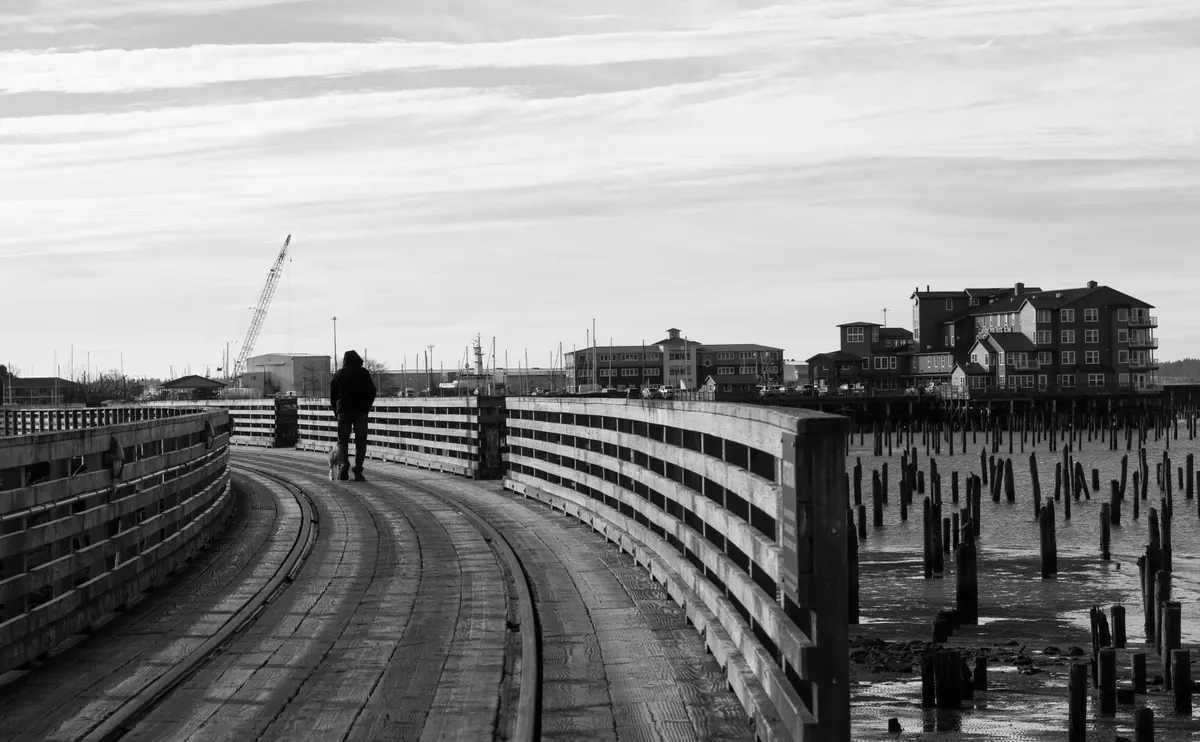
Every working port has a piece of furniture nobody dusts: the piling. Blackened, slimed at the base, leaning like a fence after a gale, usually with a rusty ring bolt and a lost lure hanging off it. Tourists photograph the cranes and the fish market. The pilings get walked past.
That is a mistake. A row of old posts is one of the most honest documents a harbour leaves behind, because nobody wrote it for an audience. It records what was tied up there, how heavy it was, how the water moved, and when the money changed hands. You only need a low tide, an hour, and a willingness to look at three levels of the same piece of wood.
Start With the Post Itself
Read a piling from the top down and it tells you a sequence of events. The cap is where rot begins, so a clean, pale sawn top on a dark, weathered post usually means the top was cut off and replaced — a small maintenance decision recorded in a single line. Below that, look for iron. Ring bolts, staples, ladder rungs, spikes with their heads hammered flat. Rope wears a groove into timber around gunwale height, where a thousand fenders and warps have rubbed; that groove is a measurement of traffic, and it always sits at the same height above the water, whatever the boat.
Then comes the tide. In most harbours you can see a band of barnacles near the top of the tidal range and a darker belt of weed below it, with mussels and algae taking over further down. That band is a calendar of how much the water moves. A post with a thick, flourishing barnacle belt high up sits in clean, salty, fast-moving water; a post furred with weed and silt near the top is in the quiet, brackish corner where nothing gets flushed.
Below the low-water line, the wood belongs to the borers. Shipworm and gribble work on timber wherever salt water and wood meet, and they leave the honeycombed, papery surface that makes an old post look like it has been eaten by something with a small, patient mouth. Where a post thins to a waist just above the mud, you are looking at the zone where oxygen, water and wood all coincide — the classic failure point, and the reason so many old rows are now stumps.
Two Shorelines, One Port
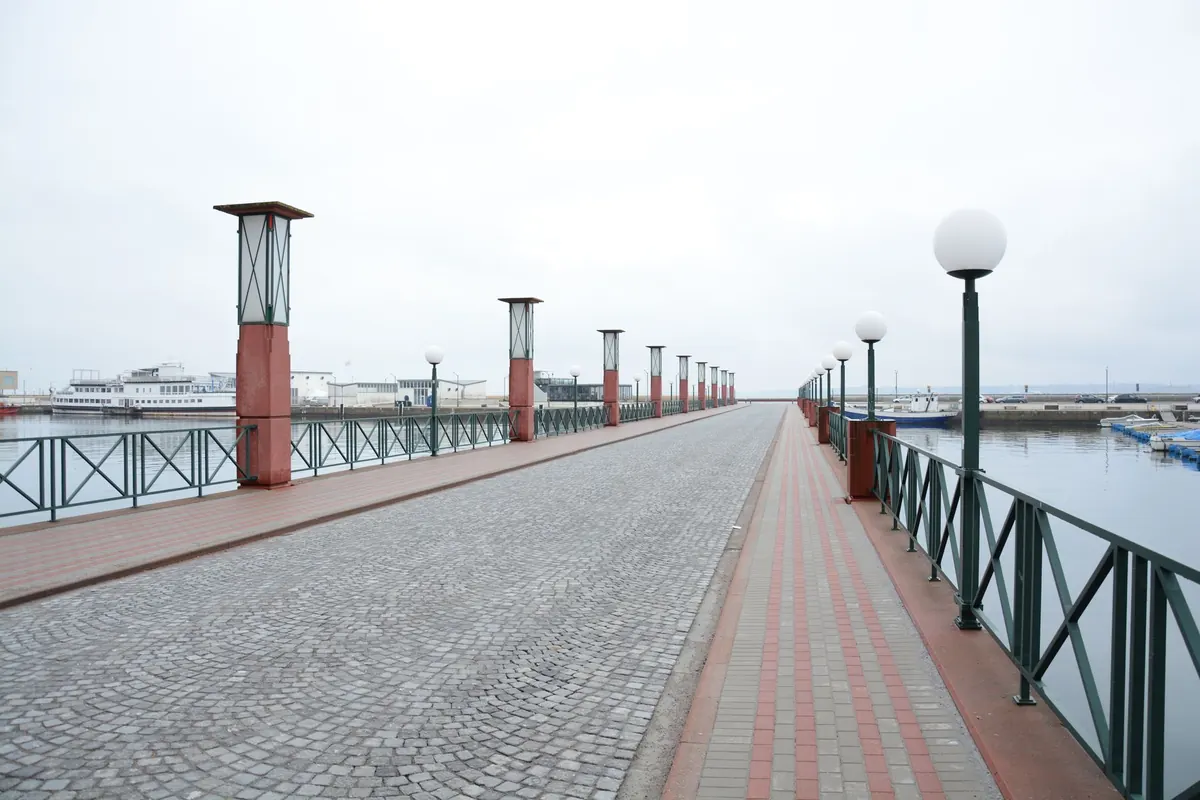
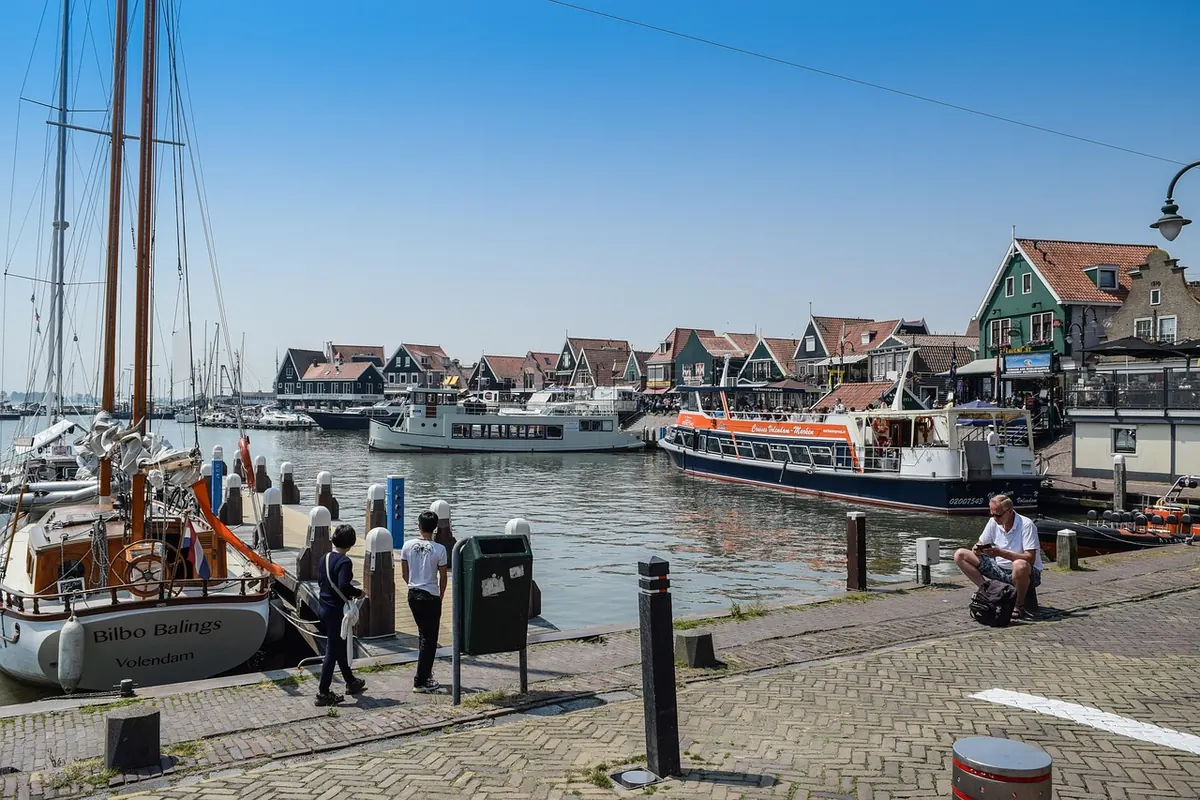
Cargo and fish build different edges. A cargo quay is organised as a line: long, straight, deep, with a wide apron for machines to turn and drainage to wash it down. A fishing harbour is organised as a cluster: short jetties, tight corners, sheds at odd angles, and everything within carrying distance of a boat.
Walking a waterfront, these are the traces worth noting:
- Bollard size and spacing. Small bollards set close together belong to small craft and many lines. A few massive, widely spaced bollards with heavy fendering point to deep-sea, ferry or tug work.
- Rails in the paving. Iron rails still running to the water’s edge mean a rail-served quay — coal, timber, grain, anything moved in bulk by wagon.
- Crane footings and winch beds. Square plinths, bolted beds and cable runs angled toward the water usually outlive the machines they served.
- Ice, salt and fuel. Concrete pads, drain channels and small brick footings near a jetty often mark where an ice house, a salt store or a fuel point once stood.
- Slipway stubs. Two parallel rails running down into the mud, or the stumps of a cradle, are the signature of hauling and repair.
- Stains. Rust bloom, oil shadow, coal dust ground into stone, fish meal in the cracks. Stains survive sweeping.
- The back lanes. Net lofts, chandlers and rope walks rarely faced the water; they faced the street behind it, and their doors and hoist beams are still there.
Most real ports are a mixture, of course. A fishing quarter that later took a ferry, a coal quay that ended its life landing sand. That layering is the interesting part; you are not looking for one story but for the order in which the stories happened.
What the Timber Itself Remembers
Old marine pilings are often not local wood. Dense tropical hardwoods, heavy enough to sink and resistant enough to shrug off borers for decades, turn up in harbours far from any tropical forest, arriving through shipbuilding, ship repair and the timber trade. On a hot day some of them still smell faintly of tar or creosote, a treatment that soaked into the grain a century ago.
Look closely and the surface becomes a workshop record. Square-cut iron nails, wire nails and galvanised spikes tell you roughly which generation of repair you are seeing. Saw marks, adze facets, and the occasional mortise or bolt hole in a post that has no business having one — those suggest a timber reused from a ship, a shed or a crane frame. Cut ends, bolted splints and patched sections all indicate a port that kept its infrastructure alive rather than replacing it, which is itself a fact about how much money was floating around.
Hardware, Paint and Rust
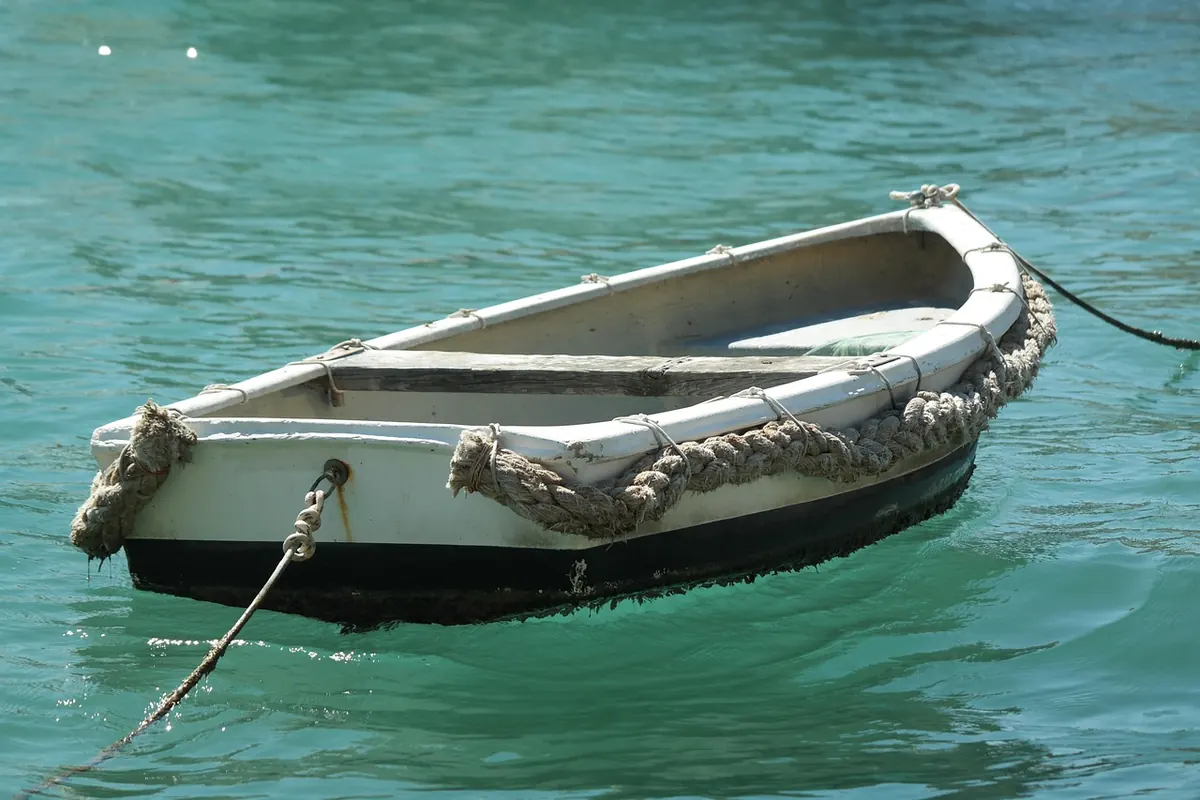
Iron is the footnote that explains the text. A mooring ring worn thin on one side has spent decades taking chain in the same direction; a ring worn all round has taken warps from every angle, which usually means a turning basin or a busy corner. Rope burns on a post face tell you where boats lay, not just where they moored.
Small things worth a second look
Paint drips on a piling mark where a shed or a boat was painted beside it. A tyre cut and bolted on as a fender marks the spot where a hull kept coming alongside. Copper nails in a timber near a slipway hint at boatbuilding rather than cargo. Rust stains spreading downward from a bolt show years of water running the same path, which is a neat way of finding the prevailing weather. None of these details is dramatic. Together they show a shoreline being used, not just owned.
A Slow Walk Along the Water
The reading takes less time than the preparation. A simple sequence works well:
- Check the tide table and go for the hour either side of low water on a spring tide, when the most timber and the most hardware are exposed.
- Walk the whole row once without stopping, just to see the pattern — spacing, lean, height, where the rows stop.
- Come back and study three posts closely at three levels: above the tide line, in the band, and at the mud.
- Measure rather than guess. Post spacing, diameter, the height of the wear groove above the mud. A tape and a notebook beat memory.
- Photograph each post the same way, with something for scale, so a later visit shows change rather than a nice picture.
- Follow the hardware inland. Bolts, rails, plinths and doorways in the street behind the quay are part of the same sentence.
- Ask. The harbour office, the yard foreman and the oldest person on the wall will each give you a different and useful version of the same fifty years.
Field Notes for Your Next Low Tide
Take a pencil rather than a pen; it writes on damp paper. Add a short tape, a cheap torch for the shadow under the coping, gloves, and boots with real grip — harbour mud is slick and deeper than it looks. Go with someone, tell a third person where you are, and keep an eye on the water behind you as well as the water in front, because a passing ferry sends a wake into places you would not expect.
Ask before you cross a working yard or a private jetty; most people say yes if you explain what you are doing, and no if you climb on rotten timber. Do not pull at hardware, lever off a fitting or pocket a ring bolt. Rotten posts collapse quietly and without warning. Leave the mud, the weed and the finds where they are, and take photographs instead.
Get into the habit and the shoreline changes character. The unremarkable row of black posts becomes a set of dates, weights and comings and goings; the rails in the paving become a route; the worn ring becomes a working day. Ports are usually described by their grand buildings. They are better understood by their furniture.
Photo: Veronika Andrews / Pexels